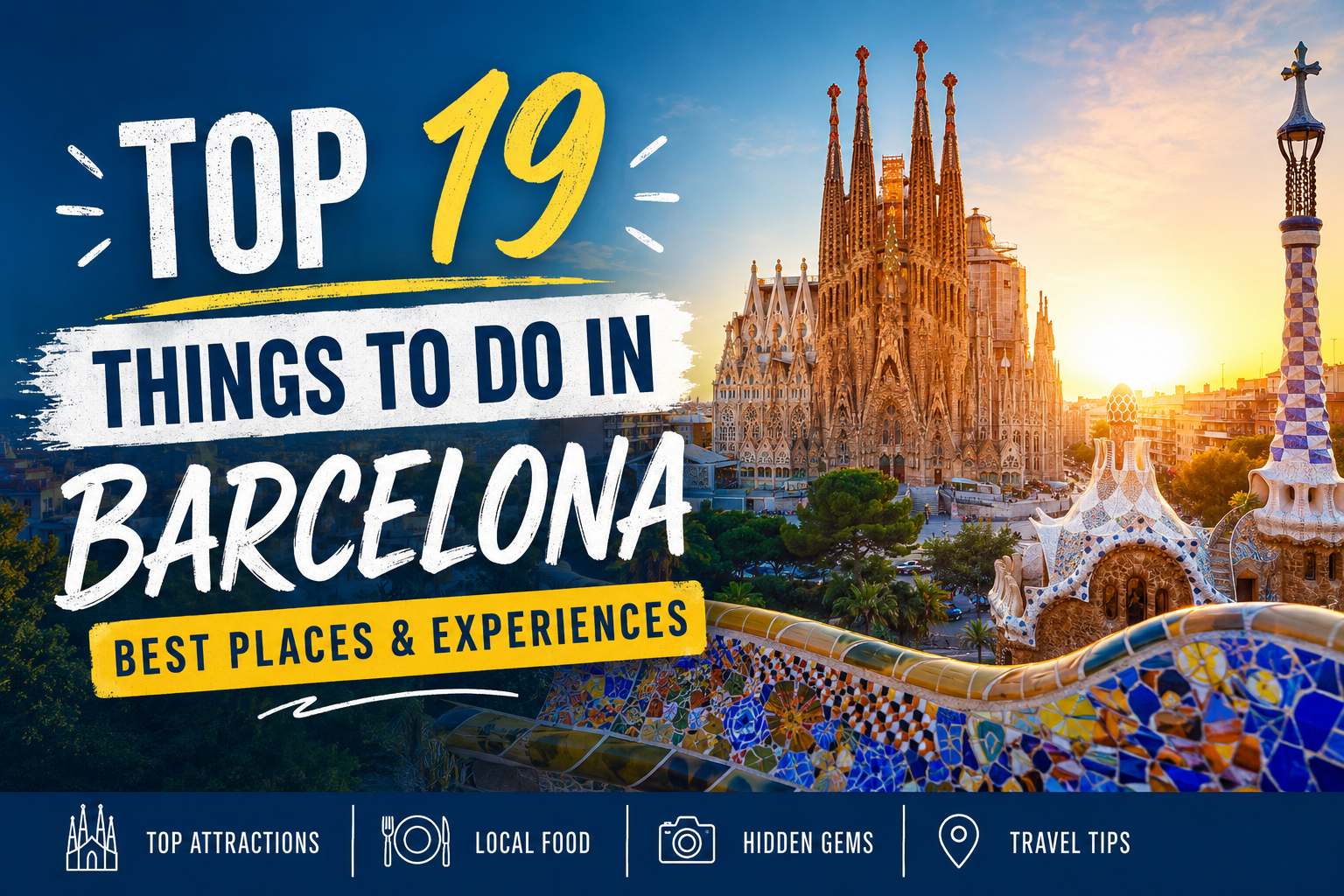
Barcelona is one of those cities that can feel exciting and slightly overwhelming at the same time. There are famous buildings, medieval streets, beaches, museums, markets, restaurants and neighborhoods to explore, and trying to fit everything into one trip can quickly become exhausting.
The good news is that you don't need to see everything to have a great Barcelona experience. With a little planning, you can combine the city's major attractions with relaxed walks, local food and time by the Mediterranean.
This beginner's guide covers the Best Things to Do in Barcelona, where to stay, what to eat, how many days you need, useful travel tips and some easy day-trip ideas.
1. Start with the Sagrada Família
Why this Barcelona landmark deserves a place on your itinerary
The Sagrada Família is the first attraction most first-time visitors should consider. Designed by Antoni Gaudí, the basilica is unlike conventional European churches. Its towers, intricate exterior details and enormous interior create an experience that is difficult to appreciate fully from photographs.
Inside, the design becomes even more interesting. Tall columns branch out like trees, while colored light enters through the stained-glass windows. As a result, the interior can feel very different depending on the time and weather.
For beginners, don't rush this visit. Give yourself enough time to look at the architectural details rather than simply taking a few photographs and leaving.
Practical tip: Check the official website before visiting and reserve a timed ticket when required, particularly during busy travel periods.
2. Explore Park Güell
Gaudí architecture with views across Barcelona
After visiting the Sagrada Família, continue your Gaudí sightseeing at Park Güell. The park combines landscaped areas, colorful ceramic work, unusual architectural shapes and views over Barcelona.
The famous mosaic features make it particularly popular with first-time visitors. However, the park is more than one photograph spot. Walking through the surrounding areas gives you a better sense of Gaudí's approach to architecture and landscape.
Because Park Güell sits away from some of the central neighborhoods, plan your route before leaving your accommodation. This will help you avoid unnecessary backtracking.
Practical tip: Admission arrangements can change, and some areas have controlled access. Check current information before your visit.
3. Wander Through the Gothic Quarter
The best place to slow down and explore on foot
Barcelona's Gothic Quarter, or Barri Gòtic, is where you should put away your map for a while. Its narrow streets, historic buildings, small squares and old stone passages create a very different atmosphere from the broad avenues of Eixample.
Barcelona Cathedral is one of the area's major landmarks, but don't limit your visit to the cathedral itself. Walk through nearby streets, stop at a small café and explore the quieter corners.
The neighborhood works particularly well in the morning before the busiest sightseeing hours. Later, it becomes an excellent place for dinner or an evening walk.
Practical tip: Wear comfortable shoes because you'll probably cover more ground than expected.
4. Walk Along La Rambla and Visit La Boqueria
See Barcelona's famous boulevard without spending your whole day there
La Rambla is one of Barcelona's best-known streets. It connects Plaça de Catalunya with the waterfront and passes several attractions, including the famous La Boqueria market.
The boulevard is worth experiencing, but it doesn't need to dominate your itinerary. Instead, use it as part of a walking route through the central city.
At La Boqueria, you'll find fresh produce, seafood, sweets, drinks and prepared foods. It is a useful stop for travelers who want to see a traditional market environment while exploring the center.
Practical tip: Crowded tourist areas require extra attention to your belongings. Keep your phone and wallet secure, particularly when moving through busy sections.
5. Discover Casa Batlló and Casa Milà
Two architectural highlights on Passeig de Gràcia
Barcelona's Modernisme architecture is another major reason to visit the city. Two of the best-known examples are Casa Batlló and Casa Milà, also known as La Pedrera.
Casa Batlló stands out for its imaginative exterior, curved forms and detailed interior. A short distance away, Casa Milà takes a different approach, with its flowing stone façade and distinctive rooftop.
You don't necessarily need to visit both interiors if your budget or schedule is limited. However, walking along Passeig de Gràcia to see the buildings from outside is worthwhile.
Practical tip: If you want to visit the interiors, compare current ticket options and book ahead when necessary.
6. Spend Time at Barceloneta Beach
Add some Mediterranean downtime to your trip
Barcelona isn't only about architecture and museums. Barceloneta Beach gives you an easy opportunity to slow down after a morning of sightseeing.
You can walk beside the Mediterranean, sit near the waterfront or combine the beach with Port Vell. It is especially useful when your itinerary starts feeling too crowded.
Don't expect the beach to be a quiet escape at the busiest times. Its central location makes it popular with both visitors and locals.
Practical tip: Keep your belongings close while relaxing at busy beaches and follow local beach regulations.
7. Explore Montjuïc
Museums, gardens and city views in one area
Montjuïc is a hill overlooking Barcelona and offers a different kind of sightseeing experience. Instead of one major attraction, you'll find several museums, gardens, viewpoints and cultural sites spread across the area.
This makes Montjuïc a good choice for travelers who want to spend several hours exploring without constantly moving between distant neighborhoods.
The Montjuïc Cable Car can also add a scenic element to your visit, depending on your route and current operating arrangements.
Practical tip: Montjuïc is larger than it looks on a map, so choose the attractions you actually want to visit before setting out.
8. Discover El Born and the Picasso Museum
A neighborhood for culture, food and evening walks
El Born is one of the easiest neighborhoods to enjoy without a strict itinerary. Its historic streets contain restaurants, cafés, independent shops and cultural attractions.
The Picasso Museum is one of the area's main cultural highlights. It offers an opportunity to explore Picasso's artistic development and his connection with Barcelona.
Even if you don't visit the museum, El Born is worth exploring on foot. The neighborhood also works well in the evening when you want to move from sightseeing into dinner.
Practical tip: Check museum admission arrangements in advance, especially if you want to visit at a particular time.
9. Try a Barcelona Food Tour
Learn the city through Catalan food
Food should be part of your Barcelona itinerary rather than something squeezed between attractions.
A food tour can be particularly useful for beginners because it introduces you to local dishes while giving you context about Catalan food traditions. Depending on the tour, you might try tapas, traditional dishes, market products and regional drinks.
Alternatively, build your own food route. Try a market in the daytime, have a relaxed lunch and then explore local restaurants in the evening.
The key is to avoid eating every meal around the most heavily tourist-oriented streets.
Practical tip: Research restaurants before your trip if you have specific dietary requirements or want a particular style of Catalan cuisine.
10. Experience Barcelona at Night
Tapas, live music and evening walks
Barcelona changes character after sunset. Rather than planning every evening around nightlife, choose an activity that suits your travel style.
Start with tapas in El Born or the Gothic Quarter. Then walk through the historic center or head toward the waterfront.
For cultural entertainment, consider live music or a flamenco performance. Travelers who prefer nightlife can find bars and clubs, while those looking for a quieter evening can enjoy a late dinner followed by a neighborhood walk.
Barcelona's dining culture also means you don't necessarily need to eat early.
Practical tip: Check the location and return transport before staying out late, particularly if you're unfamiliar with the neighborhood.
11. Find Free Things to Do in Barcelona
Enjoy the city without paying for every attraction
Barcelona can become expensive if you purchase tickets for every major attraction. Fortunately, some of the best experiences require no admission fee.
Start with the historic neighborhoods. Walking through the Gothic Quarter and El Born costs nothing, while Parc de la Ciutadella provides a pleasant outdoor break.
You can also walk along Barceloneta, explore public squares and admire famous buildings from the outside.
Some museums and cultural attractions offer free admission during specific periods or to certain visitors. However, these arrangements can change, so check official websites rather than assuming an attraction is always free.
12. Explore Barcelona's Hidden Gems
See a quieter side of the city
Once you've visited the major Barcelona attractions, consider exploring less obvious places.
The Horta Labyrinth is one option for travelers who want something different from the central tourist route. Gràcia is another good choice, particularly if you enjoy independent cafés, neighborhood streets and a less landmark-focused experience.
You can also explore quieter corners of Montjuïc and smaller galleries around the city.
The best approach is to leave some unscheduled time in your Barcelona itinerary. A free afternoon gives you the flexibility to explore a neighborhood that catches your attention.
13. Take a Barcelona Day Trip
Leave the city for a different experience
Barcelona's location makes it possible to add several worthwhile day trips.
Montserrat is ideal for mountain scenery, hiking and the monastery complex. It suits travelers who want nature and cultural history.
Sitges is a good choice for a relaxed coastal day. Its beaches and walkable center make it relatively easy to explore without an elaborate plan.
Girona appeals to history and architecture enthusiasts. Its medieval center, old streets and riverfront make it very different from Barcelona.
Costa Brava is the choice for travelers interested in coastal landscapes, beaches and smaller seaside towns. Travel time depends heavily on which part of the coast you choose.
Tarragona is particularly useful for history lovers because of its Roman heritage and Mediterranean setting.
Practical tip: Check the exact transport route and travel time for your chosen destination before booking, as journey times vary.
14. Taste the Best Local Food
Dishes beginners should look for
Barcelona is an excellent place to start exploring Catalan cuisine. You don't need to know much about the food beforehand.
Pa amb tomàquet is bread rubbed with tomato and typically finished with olive oil and seasoning. It is simple but appears frequently alongside meals.
Patatas bravas are fried potatoes served with a flavorful sauce and are a common choice for sharing.
Fideuà resembles paella but uses short noodles instead of rice and is often prepared with seafood.
Escalivada consists of roasted vegetables, commonly peppers and eggplant, usually served with olive oil.
Crema catalana is a traditional Catalan custard dessert with a caramelized sugar topping.
Bombas are fried potato croquettes traditionally filled with meat and served with sauces.
Trying several smaller dishes can be a better introduction than ordering one large meal every time.
15. Choose the Right Area to Stay
Where beginners should book accommodation
Your choice of neighborhood can significantly affect your Barcelona trip.
Gothic Quarter: Best for travelers who want historic streets and easy access to central attractions.
Eixample: A strong all-round choice, particularly for first-time visitors who want restaurants, shopping and easy access to Gaudí architecture.
El Born: Good for travelers interested in food, culture, independent shops and evening atmosphere.
Barceloneta: Suits visitors who prioritize the beach and waterfront.
Gràcia: Better for travelers who want neighborhood character, cafés and a less tourist-focused atmosphere.
Don't choose accommodation based only on the lowest price. Check nearby public transportation and walking distances as well.
16. Pick the Best Time to Visit Barcelona
Each season has a different advantage
Spring is a comfortable period for walking and sightseeing. The city can be easier to explore than during the busiest summer period.
Summer is attractive for travelers who want beach time and long evenings. However, heat, crowds and accommodation demand can make the trip more expensive.
Autumn works well for city sightseeing, food experiences and cultural activities.
Winter generally brings cooler weather and can suit travelers who prefer museums, architecture, restaurants and a quieter city break.
For a first visit focused heavily on Barcelona sightseeing, spring and autumn are practical choices.
17. How Many Days Do You Need?
Plan your trip according to your available time
One day: Choose Sagrada Família, one additional Gaudí attraction, the Gothic Quarter and El Born. Finish with dinner.
Two days: Add Park Güell, Passeig de Gràcia, Barceloneta and more time in the historic center.
Three days: Add Montjuïc, a museum and a food experience. This gives you a better balance between major attractions and slower exploration.
Four to five days: Consider adding Montserrat, Girona, Sitges, Tarragona or a Costa Brava destination.
Three days is a useful starting point for beginners, while five days gives you considerably more flexibility.
18. Barcelona Travel Tips for Beginners
Small details that make the trip easier
Barcelona is a walking city, but you don't have to walk everywhere. Use the metro and buses when attractions are far apart, then explore individual neighborhoods on foot.
Reserve popular attractions in advance when timed entry is used. This is especially important if you have only one or two days.
Pickpocket awareness also matters. Keep valuables secure around crowded attractions, busy streets and public transportation.
Wear comfortable footwear. Historic neighborhoods can have uneven surfaces, and a full day of sightseeing can involve considerably more walking than expected.
For airport transportation, compare the available metro, train, bus and taxi options based on your accommodation and arrival time.
Finally, remember that Barcelona is a lived-in city. Respect residential buildings, keep noise under control and follow local rules at beaches, monuments and public spaces.
19. A Simple Barcelona Itinerary
Three easy ways to organize your trip
1-Day Barcelona Itinerary
Start at the Sagrada Família. Continue toward Passeig de Gràcia to see Casa Batlló or Casa Milà. In the afternoon, explore the Gothic Quarter and the area around La Rambla. Finish your day with dinner in El Born.
2-Day Barcelona Itinerary
On day one, focus on Sagrada Família, Passeig de Gràcia, the Gothic Quarter and El Born.
On day two, visit Park Güell in the morning, explore Gràcia afterward, and then head toward Barceloneta and the waterfront.
3-Day Barcelona Itinerary
Use day one for Sagrada Família and Eixample.
Spend day two around Park Güell, Gràcia and the historic center.
On day three, explore Montjuïc, relax by Barceloneta and finish with a food experience or sunset cruise.
The main principle is simple: group attractions that are close together rather than crossing the entire city several times a day.
20. Frequently Asked Questions About Things to Do in Barcelona
What are the Best Things to Do in Barcelona?
Start with Sagrada Família, Park Güell, the Gothic Quarter, Casa Batlló or Casa Milà, El Born, Barceloneta and Montjuïc.
What Should I Not Miss in Barcelona?
For a first visit, prioritize Sagrada Família, Park Güell and the historic center. Then add attractions according to your interests.
How Many Days Are Enough for Barcelona?
Three days is a practical starting point. Four or five days gives you enough time to explore neighborhoods and take a day trip.
What Can You Do in Barcelona for Free?
Walk through the Gothic Quarter and El Born, explore public parks and squares, walk along the waterfront and look for museums with designated free-entry periods.
What Are the Best Things to Do in Barcelona at Night?
Try tapas, explore historic streets, enjoy live music or flamenco, walk beside the waterfront or experience Barcelona's nightlife.
Is Barcelona Worth Visiting?
Yes. Barcelona combines architecture, art, history, beaches, food and nightlife in a relatively compact destination, making it suitable for both short breaks and longer trips.
What Is Barcelona Famous For?
Barcelona is particularly famous for Gaudí architecture, Catalan culture and cuisine, Mediterranean beaches, museums, historic neighborhoods and football.
What Are the Best Barcelona Day Trips?
Montserrat, Girona, Sitges, Costa Brava and Tarragona are among the most useful options, depending on whether you prefer mountains, beaches, history or coastal scenery.
Is Barcelona Expensive for Tourists?
It can be, especially when accommodation and major attraction tickets are added together. However, travelers can control costs by choosing accommodation carefully, using public transportation and mixing paid attractions with free activities.
What Is the Best Time to Visit Barcelona?
Spring and autumn are generally practical choices for sightseeing. Summer is better suited to travelers who prioritize beaches and long evenings, while winter can work well for museums and a shorter city break.
Final Thoughts
Barcelona is much easier to enjoy when you stop trying to see every attraction in one trip. Start with the landmarks that genuinely interest you, then build the rest of your schedule around food, neighborhoods, beaches and local experiences.
For first-time visitors, the Best Things to Do in Barcelona include the Sagrada Família, Park Güell, Gothic Quarter, Gaudí's Modernisme buildings, El Born and Barceloneta. After that, your own interests should decide what comes next.
Give yourself enough time to slow down. A relaxed meal, an evening walk through a historic neighborhood or an unplanned stop at a local café can become just as valuable as another item checked off your sightseeing list.